AI Programming Hits the 'Review Bottleneck'? Mistral Drops an Open-Source Bomb
AI Programming Hits the ‘Review Bottleneck’? Mistral Drops an Open-Source Bomb
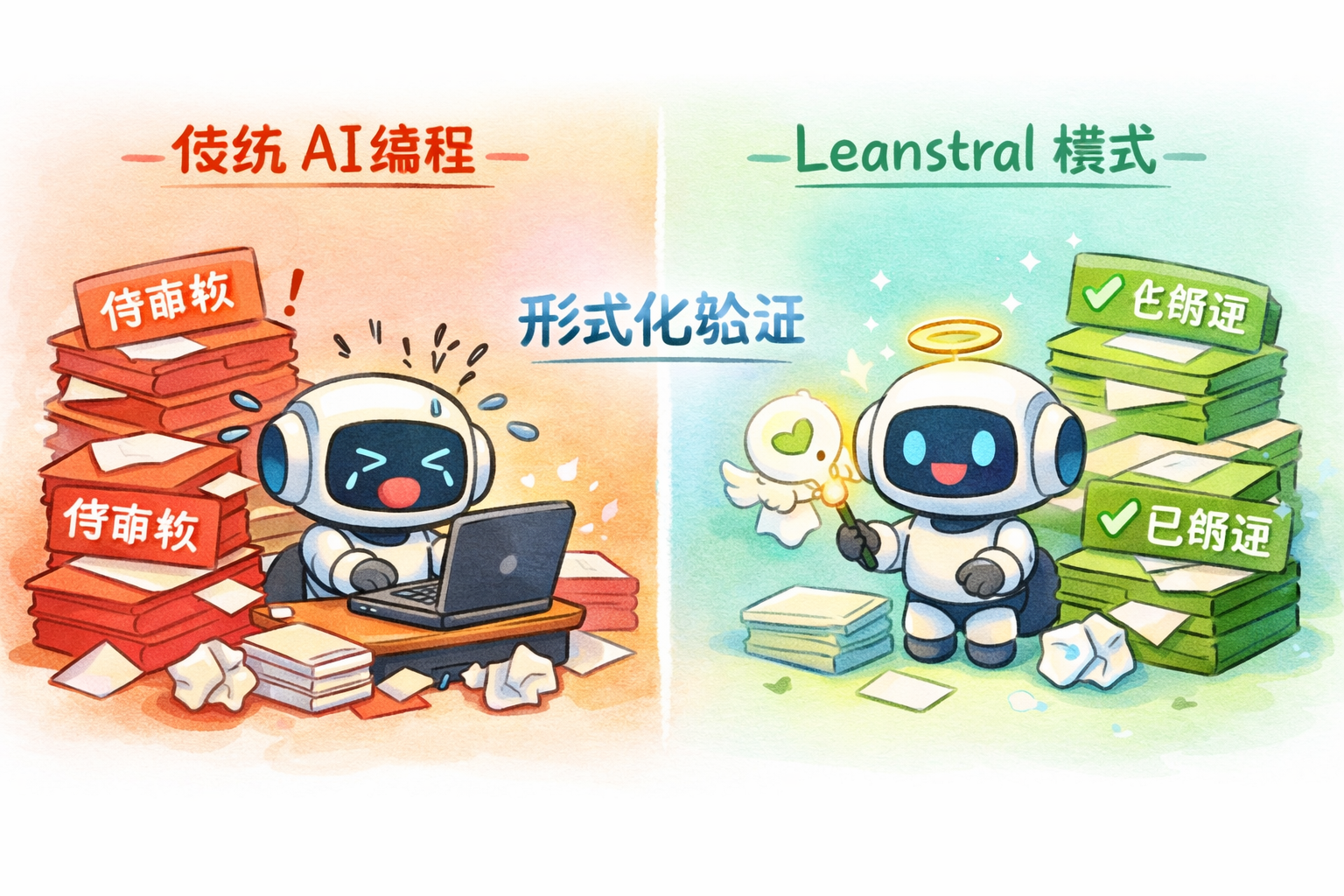
Ever written code that looked perfect on your machine, only to find it riddled with bugs once you ran it? It’s like hiring a renovation crew that seems skilled, but during the final inspection, you discover leaky pipes and messy wiring everywhere.
Traditional AI coding tools are exactly that kind of contractor—they can get the job done, but can’t guarantee quality. Until Leanstral came along, formal verification had never been brought into the world of AI code agents.
Just yesterday, Mistral AI dropped a bombshell: Leanstral, the first open-source Lean 4 code agent.
The “Last Mile” Problem in Code Generation
To understand what Leanstral is, we need to see where AI programming is currently stuck.
Tools like Copilot and Cursor are pretty powerful today. You can write functions, generate components, and they mostly work. But if you’re building mission-critical systems—like autonomous driving controls, aerospace software, or core financial logic—“it runs” isn’t enough. You need to prove it will never fail.
That’s where formal verification comes in.
Simply put, formal verification is like giving your code a “mathematical exam.” Unlike regular testing where you “try to find bugs,” it rigorously proves that “this code is correct in all scenarios.” To use an analogy, regular testing is like “spot-checking a few products,” while formal verification is “mathematically proving 100% of the batch is qualified.”
And Lean is the tool for this job.
Lean 4 is a functional programming language and a theorem prover. You can use it to prove code correctness with code. Sounds great in theory, but the barrier is extremely high—you need to be fluent in both programming and mathematics, and the proof process itself is often more complex than writing the code.
Human Review: The “Barrel Effect” in the AI Era
Mistral nailed a painful truth in their announcement:
“AI agents have proven highly capable at code generation. Yet, as we push these models to high-stakes domains, we encounter a scaling bottleneck: human review.”
Think about it—AI might generate a piece of code in 1 second, but finding a human expert to verify that code’s correctness could take 1 hour or even longer. It’s like a factory assembly line running at full speed with only one quality inspector—the bottleneck kills the throughput.
That’s exactly the problem Leanstral aims to solve: letting AI agents both write code and prove their correctness.
What Can Leanstral Actually Do?
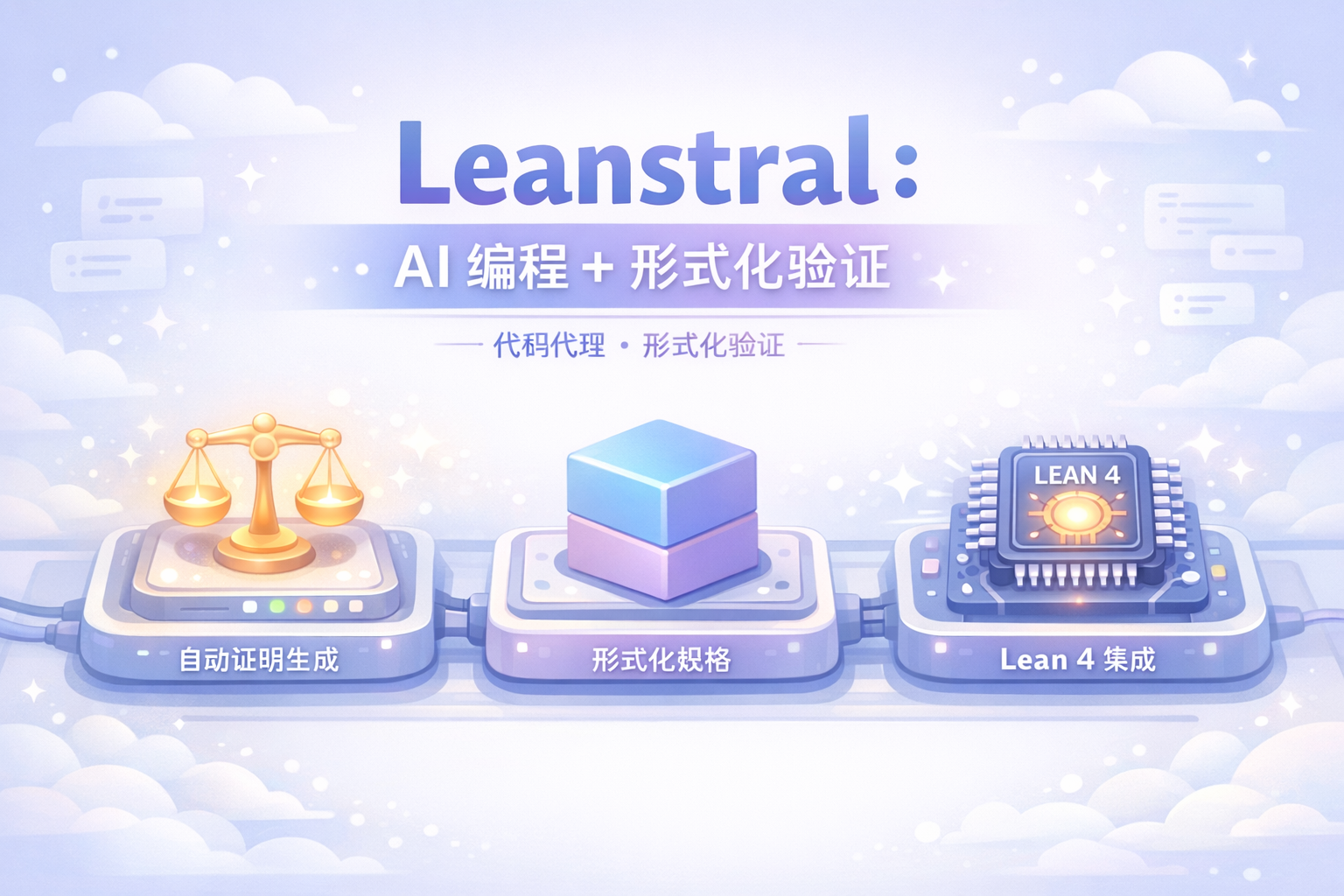
According to Mistral’s announcement, Leanstral is the first open-source Lean 4 code agent. Its core capabilities include:
- Automatic Proof Generation: AI not only writes code but also automatically generates proofs explaining code correctness
- Formal Specifications: Validates code behavior based on mathematical specifications, not “gut feelings”
- Lean 4 Integration: Full support for Lean 4’s proof language and ecosystem
In plain English: before, you needed to hire a senior engineer who understood both business and mathematics to write proofs. Now AI can help share that workload.
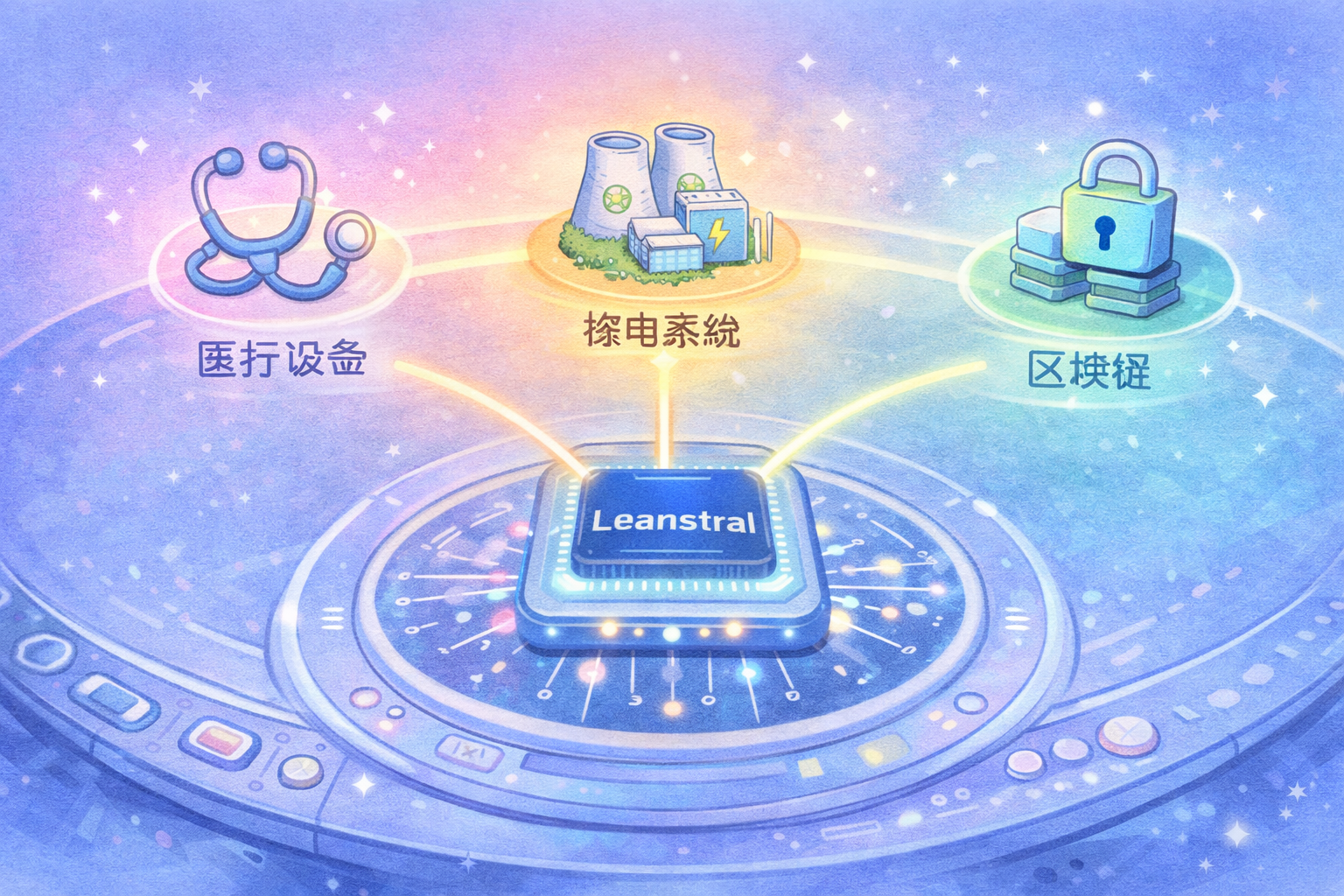
This is great news for developers working on high-reliability software. Imagine if you’re building medical device software, nuclear power control systems, or blockchain smart contracts—having AI help with formal verification could level up your development efficiency by leaps and bounds.
How to View This “First”?
Calling Leanstral “the first open-source Lean 4 code agent” is an important qualifier.
Before this, there were some AI + formal verification attempts, but they were either closed-source or not based on Lean 4. Leanstral being open-source means:
- Anyone can use it for free
- The community can participate in improvements
- Academia can build research on top of it
For the entire formal verification field, this could be a signal of moving from niche to mainstream.
What Should We Expect?
Of course, saying “AI programming is worry-free from now on” is still premature. Leanstral just launched, and many issues need solving:
- Quality and efficiency of proof generation
- Integration with existing development workflows
- Feasibility verification in real projects
But at least the direction is right. As the announcement says:
“We envision a future generation of AI programming agents that can both accomplish tasks and formally prove the correctness of their implementations.”
This might just be the next milestone in AI programming.
FAQ
Q: What’s the difference between Leanstral and regular AI programming tools?
A: Regular AI programming tools (like Copilot) can help you write code but can’t guarantee correctness. Leanstral’s special feature is that it can automatically generate mathematical proofs, formally verifying that code is correct in all scenarios. Of course, currently it mainly applies to programming languages that support formal verification like Lean 4.
Q: How important is formal verification?
A: For normal business systems, regular testing is enough. But for mission-critical systems like aviation control, medical devices, and blockchain smart contracts, formal verification can fundamentally eliminate bugs—it’s not “happens to not have errors,” but mathematically proving “will never have errors.”
Q: Can I use Leanstral now?
A: It just launched, and the actual effects still need community validation. If you’re working on high-reliability software or are interested in formal verification, this project is worth following.
Have you ever faced a situation where “verification was harder than writing code”? Do you think the direction of AI automatically generating proofs is promising? Feel free to share in the comments.
Related Articles: