 梦兽编程™AI_SUITE
Recently, discussions around GLM 5.3 Flash, Qwen 3.8 Flash, and DeepSeek V4 Flash have become lively again.
“Who has completely surpassed whom?” “Who has fallen below the kill line?” “The Chinese model landscape is being reshuffled.” These phrases move quickly across social media, as if the AI industry were holding a new tournament every few days.
Developers who actually use these models are usually less excited. They care about simpler questions:
- Can a coding agent finish a task reliably?
- Is a long context genuinely useful, or can the model merely accept it?
- Can the thinking process be turned off?
- How much does a complete task really cost?
- Can the model run efficiently in the available hardware and software environment?
That is the central argument of this article: model competition is no longer just a benchmark contest. It is a combined contest of capability, cost, latency, reliability, and infrastructure. Talking about “complete superiority” without naming the workload is not rigorous enough.
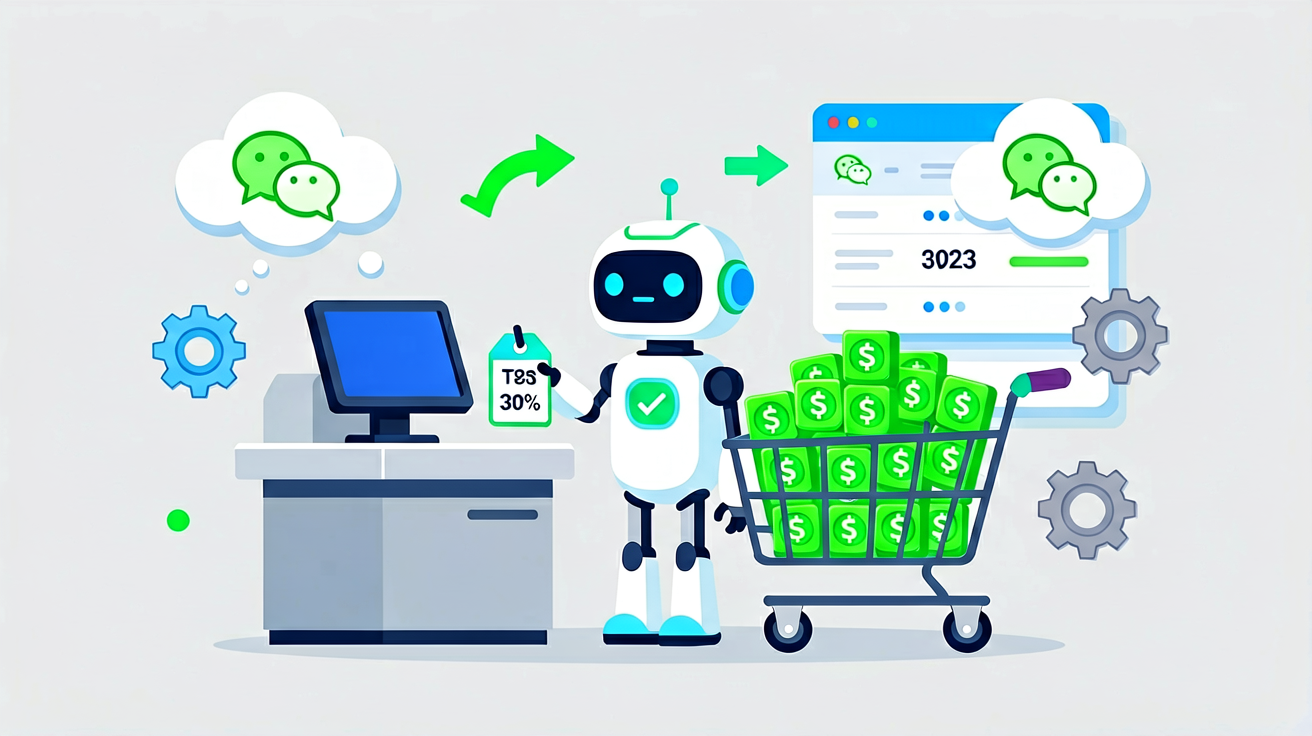
1. The “kill line” is often drawn by marketing first
Whenever a new model is released, the industry looks for a defeated model. A ranking changes on one benchmark, and someone immediately announces that the old model has been knocked out. A context window gets larger, and someone declares that the model has redefined the industry.
This narrative spreads well because it turns a complicated technical question into a sports match: there is a champion, a loser, and a leaderboard that appears easy to understand.
Models, however, are not sprinters. They are more like a restaurant kitchen. Maximum stove power does not mean every dish will arrive faster, and a high rating for a signature dish does not mean the kitchen will not collapse during the dinner rush. A model that leads on one benchmark may not be the best at code editing, tool use, long-document retrieval, or high-concurrency serving.
Benchmarks are useful. They help us compare specific capabilities. But they are normally run with fixed datasets, prompts, and reasoning budgets. Real tasks keep changing: context grows, tools return errors, requirements change halfway through, and the model may need to make a dozen calls in a row.
So we need to separate a model’s score on a particular test from its performance at real work. The first answers, “How did it do in this exam?” The second answers, “If we hired it, could it get the job done?”
2. A low API price does not mean a low task cost
When comparing models, many people start by opening the price page and choosing the model with the lower input and output rates.
That is like renting a car by looking only at the per-kilometer price while ignoring the starting fee, parking, tolls, and return fee. After the trip, you discover that the fuel was not the expensive part. The items you did not count at the beginning were.
The real cost of an API task includes at least:
- input tokens that miss the cache;
- input tokens that hit the cache;
- ordinary output tokens;
- tokens generated during thinking;
- tool calls and multi-turn loops;
- retries after failures;
- latency and hardware occupancy caused by long context.
A rough model is:
Actual cost = cached input cost + uncached input cost + output cost + thinking cost + retry cost
In agent coding, code review, and automation, system prompts, tool definitions, project files, and conversation history are sent repeatedly. In these workloads, the prompt cache hit rate may matter more than the standard input rate on the price page.
Our testing found that cache hit rates can reach approximately 99% to 100% in relevant workloads. DeepSeek V4 Flash was priced at roughly $0.005 per million cached tokens, while GLM 5.3 Flash was roughly $0.01 per million cached tokens. Exact prices and model versions should always be checked against the current official documentation and actual billing, but the comparison makes one point clear: continuous workloads cannot be evaluated using uncached input prices alone.
A useful test table for developers looks like this:
| Metric | DeepSeek V4 Flash | GLM 5.3 Flash |
|---|---|---|
| Prompt cache hit rate | Approx. 99%-100% | Approx. 99%-100% |
| Cached input price | Approx. $0.005/M tokens | Approx. $0.01/M tokens |
| Thinking mode | Can be disabled | Forced in some scenarios in our testing |
| Total call count | Not recorded in this test | Not recorded in this test |
| Thinking token count | Not recorded in this test | Not recorded in this test |
| Simple script task time | Not recorded in this test | Up to the ten-minute range in our test |
| Final task cost | Calculate from actual bill | Calculate from actual bill |
Note: The table includes only values explicitly recorded or directly calculated in our testing. Values without complete records are not invented.
This table is less exciting than “complete domination,” but it is much closer to production reality.
3. Thinking is not always better. Control is the key
Thinking is not inherently bad.
For mathematics, complex planning, and code refactoring, giving a model more time to reason can reduce impulsive answers. The issue is whether the model can tell when deep reasoning is worthwhile, and whether the user can turn it off or adjust its budget.
Writing a small script and designing a distributed system should not trigger the same scale of brainstorming. If a model writes an internal research paper before changing one port in a configuration file, the user’s patience and budget may finish first.
Our testing found that DeepSeek can disable its thinking process, while GLM 5.3 Flash forces some thinking resources in certain scenarios. This can make simple script tasks slower and increase output costs. The point is not that less thinking is always better. The point is that we need to pay attention to controllability:
- Can thinking be disabled?
- Can the reasoning budget be configured?
- Can users switch between fast and deep modes?
- Can thinking tokens be measured?
- Can developers route different workloads to different modes?
A mature model should not keep its foot on the accelerator all the time. It should know when it is on a highway and when it is merely moving around a parking lot.
4. A long context is not successful merely because it fits
Context length is another popular number in model marketing.
The numbers have grown from 128K to 256K and then to one million tokens, much like camera megapixels in a phone launch. But context-window size only says how much content an API accepts. It does not say how much content a model can use effectively.
Useful long-context capability has at least four layers:
- Can the model accept a longer input?
- Can it retrieve key information from heavy interference?
- Can it connect facts across documents and sections?
- Can it remain stable over multiple turns without forgetting or drifting?
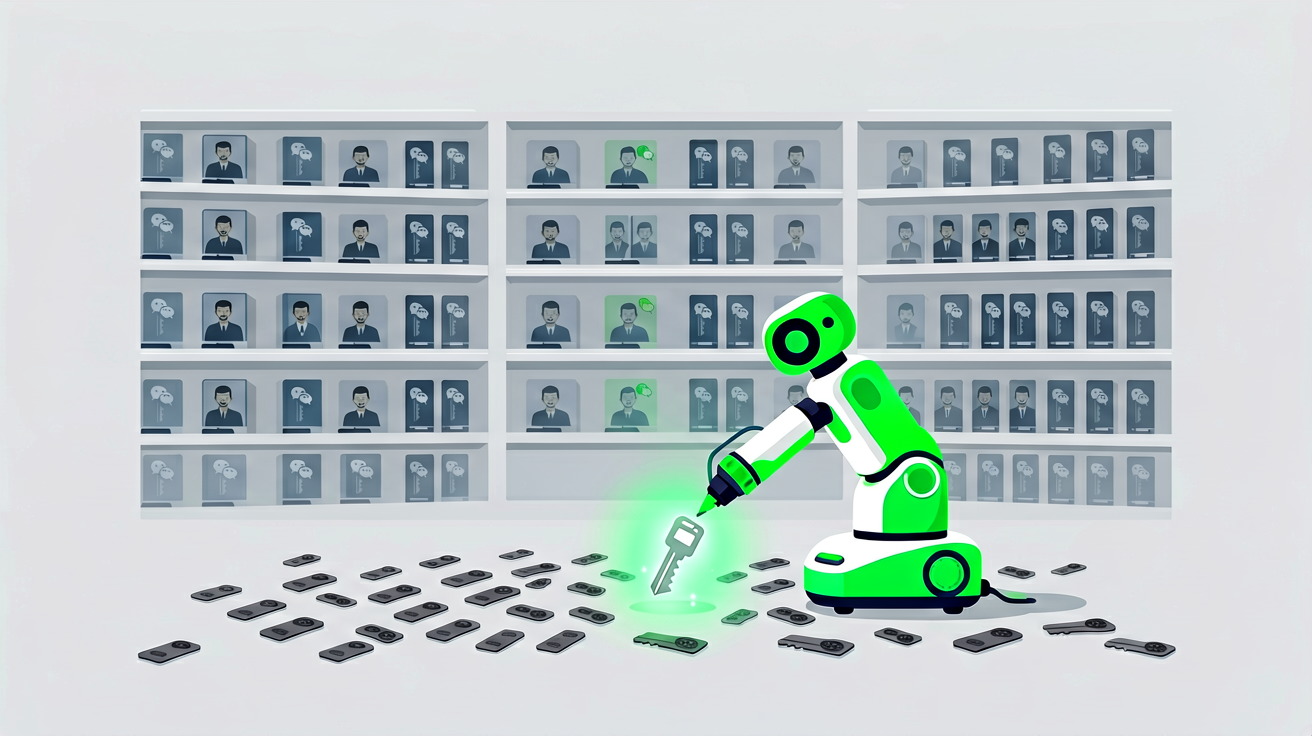
Imagine moving an entire library into an office. A larger bookshelf is helpful, but if the librarian can only say that a book is “somewhere in the corner,” the larger bookshelf has not improved the work very much.
We tested long-context capabilities such as HCS and the ability to find planted information in contexts containing hundreds of thousands of tokens. These tests are useful, but one needle-in-a-haystack run cannot represent all long-context capability. More realistic tests should include multiple similar facts, cross-file relationships, repository-level code understanding, tool use under long context, and continuous multi-turn editing.
The important question is not “How much can fit?” It is: After all that content fits, can the model still find, understand, and use what matters?
5. Real cost optimization happens inside the inference system
Model competition does not happen only inside model weights. It also happens in memory, compilers, schedulers, and inference frameworks.
As context grows and concurrent requests increase, the KV cache can quickly consume GPU memory. HBM is fast but expensive and limited. DRAM offers more capacity at lower speed. SSD storage is cheaper but introduces a larger data-movement delay.
An efficient inference system keeps hot data in fast memory and moves less frequently accessed data to DRAM or slower storage when appropriate. The hard part is not merely whether data can be moved. It is deciding what to move, when to move it, and how to keep data movement from blocking computation.
Our testing covered directions including Engram, cold KV-cache offloading, and SGLang. Model-architecture mechanisms and inference-system optimizations must be distinguished; they are not the same layer. Together, however, they point to a practical reality: whether a model is cheap often depends on how the complete system manages memory and computation.
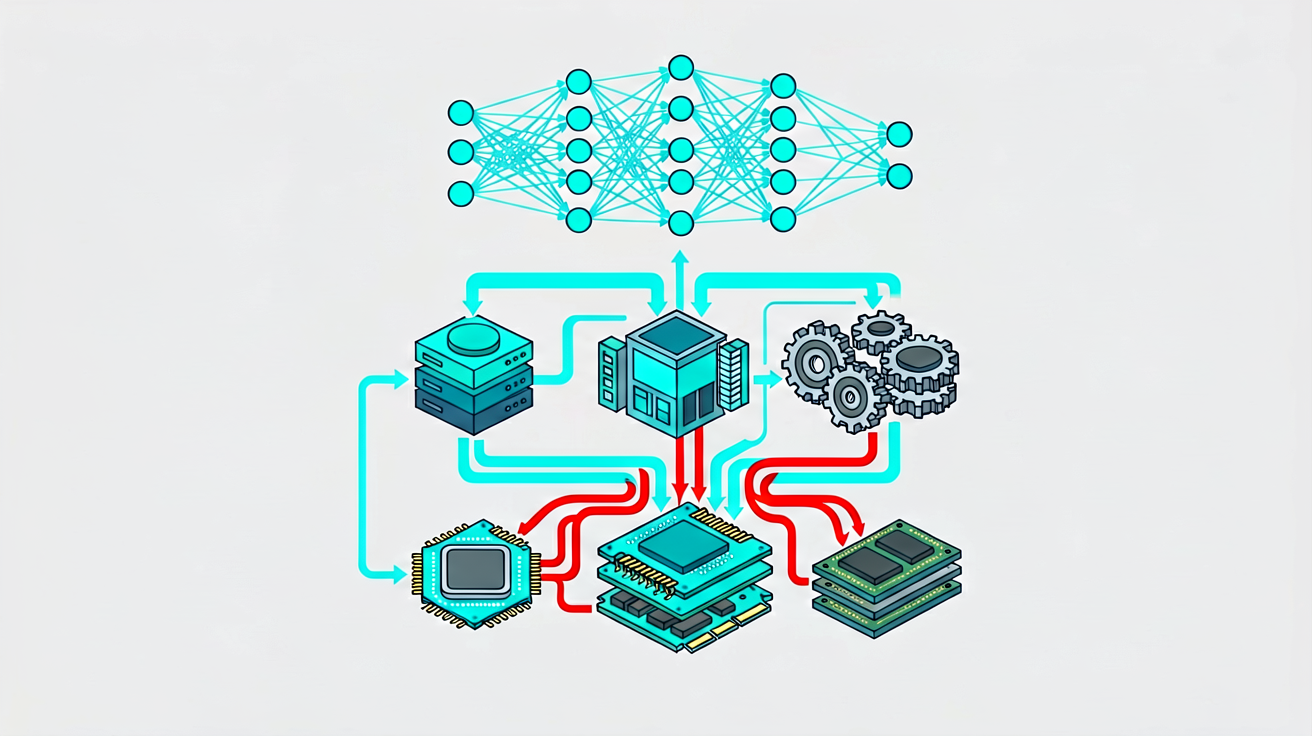
Hardware adaptation is not finished when a model simply “runs” on a new accelerator. The model must use the chip effectively, operators must execute efficiently, the compiler must remain stable, and memory and communication must match the workload.
Our testing also examined how DeepSeek uses approaches such as Triton to improve cross-platform adaptation and how it targets domestic accelerator platforms such as Ascend. Whatever the exact implementation details, the industrial logic is clear: future models cannot aim for good scores in only one hardware and software ecosystem. They must run reliably, quickly, and economically across different computing environments.
6. Chinese models need competition, not fandom wars
This does not mean Chinese models should stop competing. Competition drives lower prices, better tooling, and better products.
DeepSeek has distinctive strengths in inference efficiency, cost control, open-source influence, and engineering optimization. GLM continues to explore domestic accelerator support, enterprise services, and developer-tool integration. Qwen has a strong position in open-source ecosystems, model-size coverage, and local deployment. Kimi has built a recognizable path around long-document applications and product experience. Hunyuan, Xiaomi, and other vendors are also exploring multimodal, edge-device, and industrial scenarios.
These differences are not weaknesses. They are the variety the industry needs.
What we should avoid is turning technical competition into emotional competition, turning users into brand fans, and turning one leaderboard into a declaration of total victory. “Complete domination” and “the end of model X” may generate traffic, but they are poor tools for technical selection.
A more useful evaluation gives every model five scorecards:
- Capability: reasoning, code, mathematics, writing, and multimodal understanding;
- Engineering: latency, throughput, reliability, and tool-call success rate;
- Economics: token, cache, retry, deployment, and hardware cost;
- Ecosystem: APIs, SDKs, IDEs, frameworks, and domestic hardware support;
- Experience: thinking controls, debugging, recovery, and integration effort.
Only by looking at these dimensions together can users decide whether a model fits their work.
Conclusion: Users ultimately pay for reliable task completion
The “kill line” is a favorite phrase of public opinion, but it is not the most important metric in engineering.
A model is not surpassed merely because of one benchmark or one price table. It has to be placed in real tasks and tested for cost, speed, stability, long-context behavior, tool use, and hardware adaptation.
In agent coding, cache strategy may matter more than the headline price. In simple tasks, the ability to disable thinking may matter more than theoretical reasoning strength. In enterprise deployment, hardware compatibility and operational cost may matter more than leaderboard position. In long-document work, effective retrieval may matter more than the advertised context length.
The large-model industry is entering a more practical phase. The next competition will not be only about parameter count or benchmarks. It will be a combined competition in model architecture, inference systems, computing ecosystems, developer tools, and business cost.
Chinese models do not need a constant stream of “who killed whom” stories to prove their value. The models that last will be the ones that run reliably in real work, complete tasks at a reasonable cost, and keep improving the user experience.
AI is a long-distance technical race. The industry needs competition, but it also needs patience; innovation, but also honest testing; rankings, but also an understanding of the conditions behind them.
When users start voting with real tasks, real bills, and long-term experience, the “kill line” created by marketing will naturally lose its power. In the end, model fortunes will be decided not by who shouts the loudest, but by who gets the work done best.
If you are building AI agents, evaluating model APIs, or connecting local models to your development workflow, follow “Full-Stack Summit - Rex Programming” for more model tests and engineering practice.

Note: The data in this article comes from our model testing and engineering validation. Prices, cache hit rates, model behavior, and hardware compatibility may change with service versions, request patterns, and hardware environments. Verify them independently against current documentation, actual billing, and your target workload.