 梦兽编程™AI_SUITE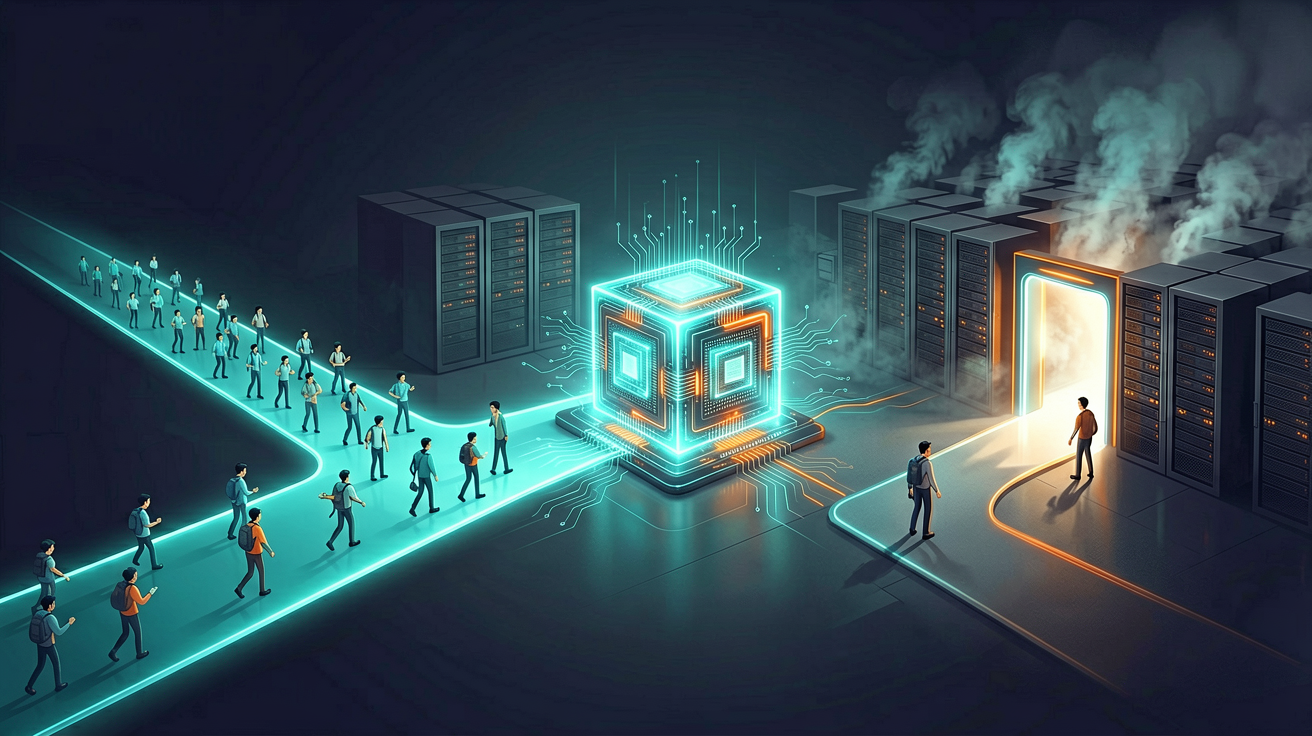
DeepSeek once changed the pricing conversation around large language models with one word: cheap.
It showed developers that a capable model did not necessarily have to be expensive. That made it easier for independent developers and small businesses to put an LLM behind a real product. The low price eventually became one of DeepSeek’s strongest brand assets.
Now DeepSeek is introducing peak and off-peak pricing for its API. Calls made during peak hours cost more, while off-peak usage is cheaper. Some individual billing items have risen by more than ten times.
This is not just a routine price adjustment. It is DeepSeek correcting the market expectation it helped create: models can be cheap, but they cannot be infinitely cheap; users can grow quickly, but compute costs do not disappear.
 Cover: When a low-cost model meets the real compute bill
“Up More Than Ten Times” Does Not Mean Every Price Did
The first thing to clarify is the claim that spreads most easily.
DeepSeek API pricing depends on the model, input and output tokens, and whether the input is served from cache. According to DeepSeek’s official pricing page, the V4 family uses peak and off-peak rates. In Beijing time, 9:00-12:00 and 14:00-18:00 are peak hours; all other hours are off-peak.
The increase is not uniform. Some items mainly double during peak hours, while some smaller billing categories rise much more. Certain cached-input prices are more than ten times higher than their previous levels.
So “the highest increase is more than ten times” can describe specific billing items. It should not be rewritten as “every model, every request, and every user is paying ten times more.”
That distinction matters. Individual users, API developers, and enterprise customers do not face the same bill.
If you use the web or mobile app for occasional conversations, an API price change may not flow through to your personal spending at the same rate. The direct impact falls on developers who put DeepSeek behind products and business systems: writing tools, customer support, enterprise knowledge bases, coding assistants, document analysis, and automated workflows.
For these products, the hours when users need the service most may also be the hours when the API costs the most.
This Is Not Just a Price Increase. Time Is Now Part of the Bill
Before peak pricing, a developer could usually start with one number: the price per million tokens.
Now there are more questions:
- Is the request happening during peak or off-peak hours?
- Did the input hit the cache?
- Can batch work be delayed until the evening?
- Does this task really need a more expensive model?
In other words, API cost is no longer determined only by how much you use. It is also determined by when and how you use it.
From the platform’s perspective, the mechanism has a reasonable technical rationale. LLM serving is not a static web page. Every response consumes GPU capacity, memory, inference time, networking, and electricity. When users call the model at the same time, concurrency pressure increases. Higher peak prices can move non-urgent jobs into quieter hours.
But from the user’s perspective, peak pricing has another meaning: part of the platform’s resource pressure is being passed on to the customer.
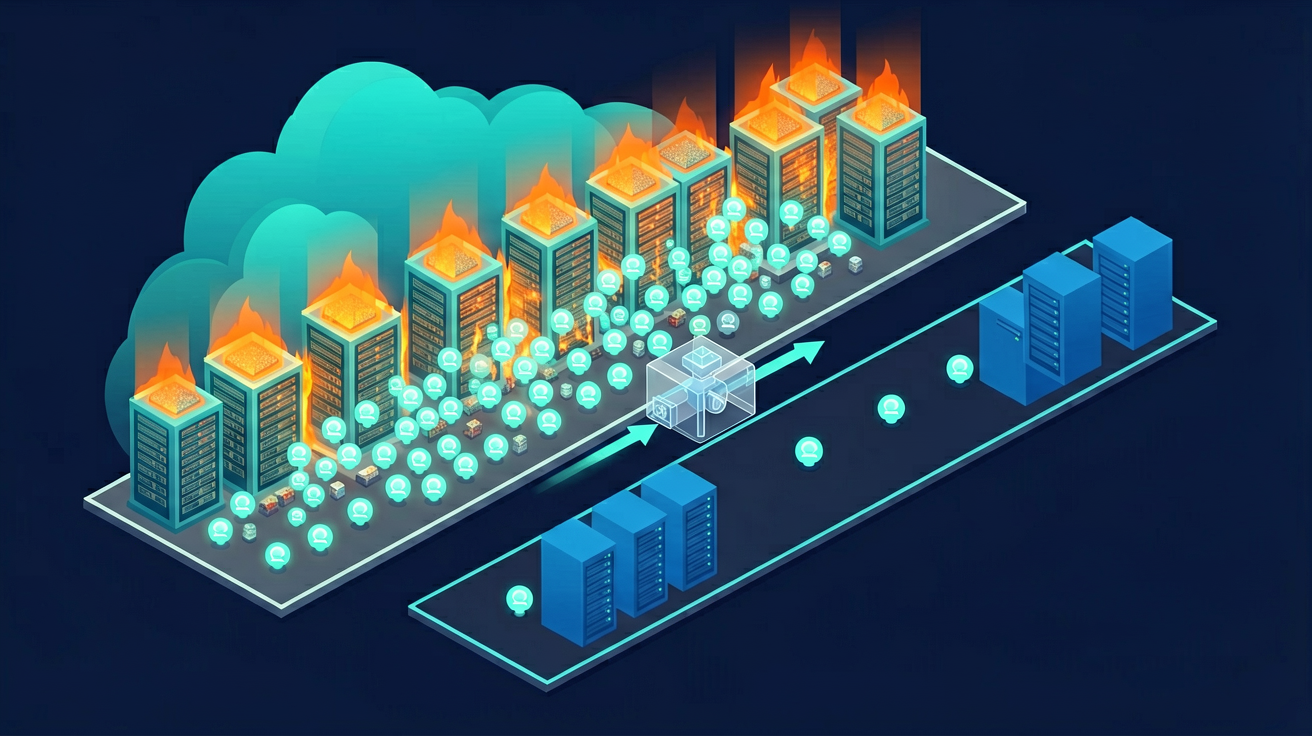 Figure: Congestion at peak hours and off-peak scheduling
That may be a legitimate business decision, but it should not be presented only as a stability improvement. Users are paying more because the platform’s resources are more constrained at peak times. A platform that benefited from low prices and rapid adoption also has a responsibility to explain the duration, rationale, and expected service improvements behind a price change.
DeepSeek Has to Take Responsibility for Its Low-Price Story
DeepSeek’s biggest contribution was changing what the market thought LLM pricing could be.
It suggested that architecture, algorithms, and engineering efficiency could make capable models dramatically cheaper. That forced other vendors to reconsider their pricing and gave developers more options.
But was the low price a sustainable efficiency advantage or a customer-acquisition strategy? That is the question DeepSeek now has to answer.
If the price came mainly from durable efficiency gains, the rate should at least remain predictable as usage grows, perhaps falling further over time. If it came mainly from early subsidies and user growth, price increases become inevitable once demand arrives at scale.
The new peak and off-peak model suggests that DeepSeek is moving from price disruptor to commercial platform with real cost management. That does not mean it has lost its technical edge. It does mean that the image of “always cheap” is disappearing.
Users once believed: DeepSeek is capable and inexpensive.
They now have to accept: DeepSeek may still be capable, but it will not remain extremely cheap forever.
For an AI company, that is part of commercial maturity. For developers who built products around a low-cost API, it is a bill that has to be recalculated.
Low Price Is Not the Same as Low Cost
The loudest theme in the LLM market over the past year was the price war: lower API rates, free credits, extended promotions, and free tiers turned into marketing messages.
That was good for users, but it also created a dangerous assumption: that the real cost of running an LLM should be this low.
Model price and model cost are not the same thing. Training requires hardware and electricity. Inference consumes GPU capacity continuously. Data centers require construction and maintenance. Model updates, engineering, operations, security, and support all cost money.
A platform can temporarily reduce prices through funding, subsidies, rate limits, or promotions. It cannot make those costs disappear permanently.
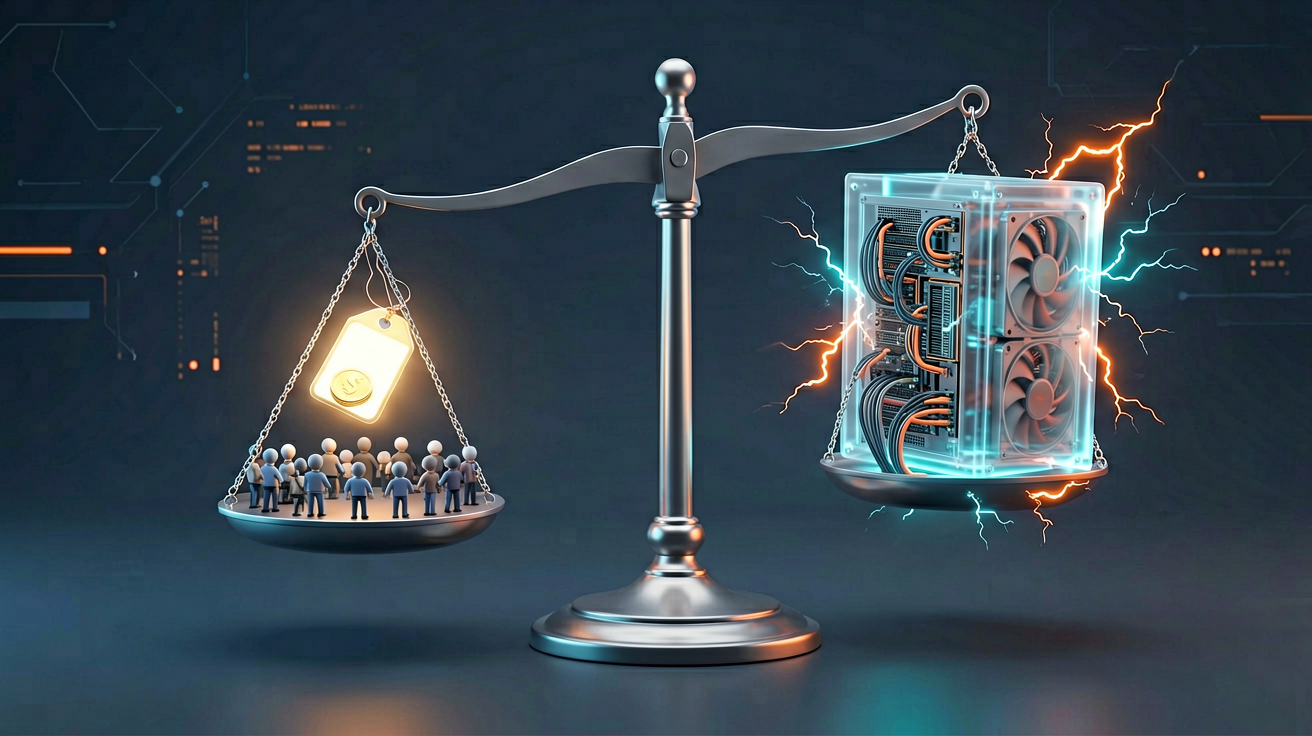 Figure: Demand attracted by low prices eventually makes infrastructure costs visible
DeepSeek’s adjustment shows that it is facing this reality too. But it also deserves criticism: its extremely low early prices helped redefine user expectations, and a later shift to more complicated billing inevitably creates a gap between expectation and reality.
The criticism is not that DeepSeek must operate at a loss forever. The criticism is that it has to take responsibility for the pricing story it created.
A Price Increase Does Not Prove Technical Failure. It Tests Commercial Capability.
DeepSeek’s price increase does not prove that Chinese AI technology has failed, nor does it prove that DeepSeek’s models or engineering claims were fabricated.
Model capability, compute supply, API pricing, and business models are different questions.
But DeepSeek cannot answer every user concern with model capability alone. Customers are not buying a product demo. They are buying a service that should be stable, reliable, and predictable.
A launch presentation shows what a model can do. A commercial service has to answer different questions:
- Does it remain stable during peak demand?
- Can it handle concurrency?
- Is the price predictable?
- Is there enough notice before prices change?
- Can the service continue to operate as usage grows?
A powerful model with unstable service and unpredictable costs is difficult to use as critical enterprise infrastructure.
Technical progress is not just about training a model. It is about turning that model into a service people can depend on.
Three Questions DeepSeek Still Needs to Answer
How long will the low-price strategy last?
Businesses care not only about today’s rate, but also about next quarter’s and next year’s cost model. If prices keep changing, DeepSeek needs to make clear whether low pricing is a long-term strategy or a temporary promotion.
Will the service improve after the increase?
If peak pricing is meant to address resource pressure, users should reasonably expect more stable concurrency, less queuing, and faster responses. Higher prices should come with service improvements that can actually be observed and measured.
Will DeepSeek become what it once challenged?
DeepSeek challenged high prices and low efficiency across the industry. If it eventually adopts complicated pricing, time-based billing, and tighter promotions, it needs to show that it is making the industry more efficient rather than simply becoming another platform charging users for compute.
The Era of Cheap AI Is Not Over. Unlimited Cheap AI Is.
DeepSeek’s price increase does not mean ordinary people will suddenly be unable to use AI. For light workloads, model calls may remain inexpensive.
But the assumption of high performance, unlimited usage, and permanent free or near-free access is disappearing.
AI platforms may increasingly resemble cloud and power services: different rates at different times, different prices for different models, different resource costs for different tasks, and separate billing for cache hits and misses.
That is not necessarily a bad thing. Sustainable pricing can help platforms operate for the long term, and pricing can help schedule scarce resources.
The condition is transparency: clear rules, advance notice, service quality that matches the price, and no sudden monetization of user dependence. Platforms should not build unrealistic expectations with exaggerated low-price messaging.
The criticism DeepSeek needs to accept is not “why can you not stay cheap forever?” It is this:
After using low prices to shape the market’s expectations, and then using more complicated pricing to move costs back to users, did you explain the change clearly enough?
That is a question of commercial trust.
Conclusion: Do Not Make Users Pay for the Low-Price Narrative
DeepSeek’s price increase does not prove that Chinese AI has failed. But it is also not something that can be dismissed as a simple resource-allocation measure.
It exposes a problem shared by the entire LLM industry: everyone wants stronger models, lower prices, faster responses, and more reliable service, but compute and infrastructure costs do not disappear.
DeepSeek broke the industry’s assumptions with low prices. Now it has to show whether it can build a mature, transparent, and sustainable business model beyond low prices.
AI companies can raise prices. But users should not be asked to pay for the platform’s earlier low-price narrative.
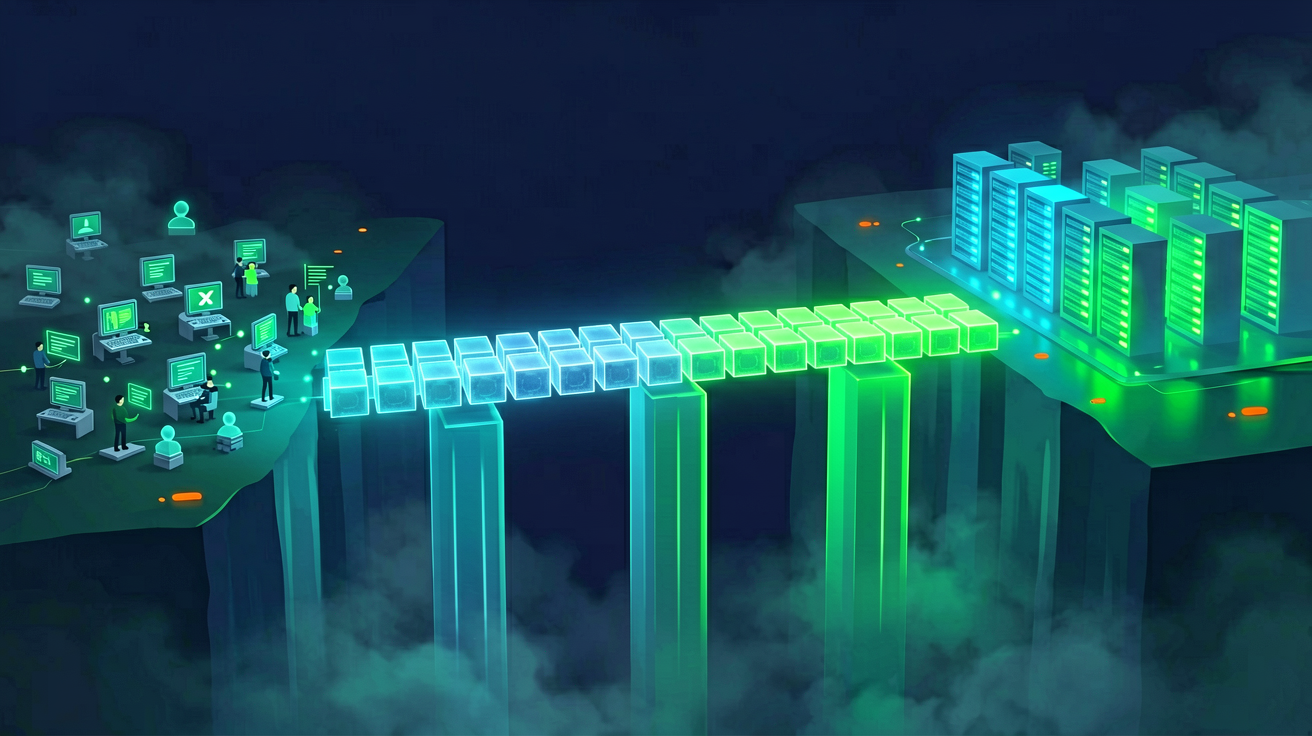 Figure: A sustainable AI service must cross capability, reliability, and cost constraints together