Some Things Just Take Time

In the AI era, software development keeps getting faster. But some things break when you try to speed them up. Picture this: you buy an empty plot of land next to a neighbor who planted a row of oaks fifty years ago. You want some trees of your own. The saplings are easy to buy. But to grow them into those towering giants? The only way is to wait. No shortcuts, no speed buttons, no prompt that can solve this.
That’s what Armin Ronacher is trying to say. He’s the creator of Flask and Jinja2, two well-known open source projects. A few days ago he published a short post on his blog titled “Some Things Just Take Time.” Within a day, it racked up over 500 points on Hacker News, with the comments section filled with “this is exactly what I’ve been feeling.”
The Industry’s New KPI: Faster, Always Faster
Ronacher says the entire industry is obsessed with speed.
Fast iteration, fast deployment, fast launch, fast validation. Sounds great on paper. Prototypes can be fast. Experiments can be fast. Demos can be fast. Learning a new framework’s hello world can be fast. None of that’s the problem.
But some things go wrong when you try to do them faster.
Compliance is the clearest example. SOC2, ISO 27001, various audit processes — anyone who’s been through them knows how tedious they are. A chorus of voices says: “These friction points are so annoying, let’s automate them all away with AI.” Ronacher’s stance is clear: some friction exists for a reason.
Here’s a small example. The “cooling-off period” before major decisions — many people find it annoying. Didn’t you read the contract already? Why wait three days? But psychological research has long proven that looking at a contract again three days later significantly increases the chance you’ll spot problems. This isn’t bureaucracy for its own sake. It’s protecting you.
Software is the same. The friction of code review, the friction of design reviews, the checklist before deployment — they’re not there to block you. They’re forcing you to pause at critical points and think.

AI Made Everything Faster. Now What?
Here’s Ronacher’s sharpest observation:
AI writes code fast now. That’s not news. But people are starting to think: if AI is this capable, shouldn’t review and checklists be automated too?
This logic is spreading: code is written, AI reviews it, then it ships. Infrastructure? AI configures it. Security scans? AI runs them automatically. The only friction left in the entire pipeline might be the one second it takes to click “deploy.”
The consequence: the software being built today — software that users and businesses depend on — may have a shelf life measured in months rather than decades.
Ronacher mentions a detail that stuck with me: in one of last year’s YC batches, several companies simply vanished without a word to their customers. They shut down, turned off their services, and disappeared. They called it “fast iteration.”
Ronacher says: this isn’t healthy iteration, it’s a breakdown of basic trust. A proper shutdown takes time, costs money, and requires giving users a proper explanation. But our environment treats that as “time not wisely spent.”
Open Source Projects Are Dying in Batches
Ronacher’s core identity is an open source maintainer. He points to a troubling phenomenon:
Everything is an “open source project” now, but many of them had commits active for a week or two, then vanished. The creator’s enthusiasm faded, and so did the project.
Ronacher has been doing open source for close to twenty years. He says his last ten-year stint at a startup wasn’t about willpower or a sense of mission. It was just showing up, consistently. One day he looked back and realized the thing had roots that went deeper than his enthusiasm on any given day.
This rings true for anyone who has worked on open source. The pattern is familiar:疯狂 commit during the peak of enthusiasm, then disappear when the wave passes. Projects that survive tend not to do so because of superior technology, but because someone kept showing up.
Ronacher’s standard: A good open source project has a maintainer who plans to stick with it for many years, or has a succession strategy in place, or has built a community strong enough to carry it. Otherwise, it will most likely disappear.
He even draws a parallel with business: companies shutting down without warning in YC batches, and open source projects disappearing when enthusiasm fades — they’re the same affliction. Treating “experimentation” as a substitute for “delivery.”
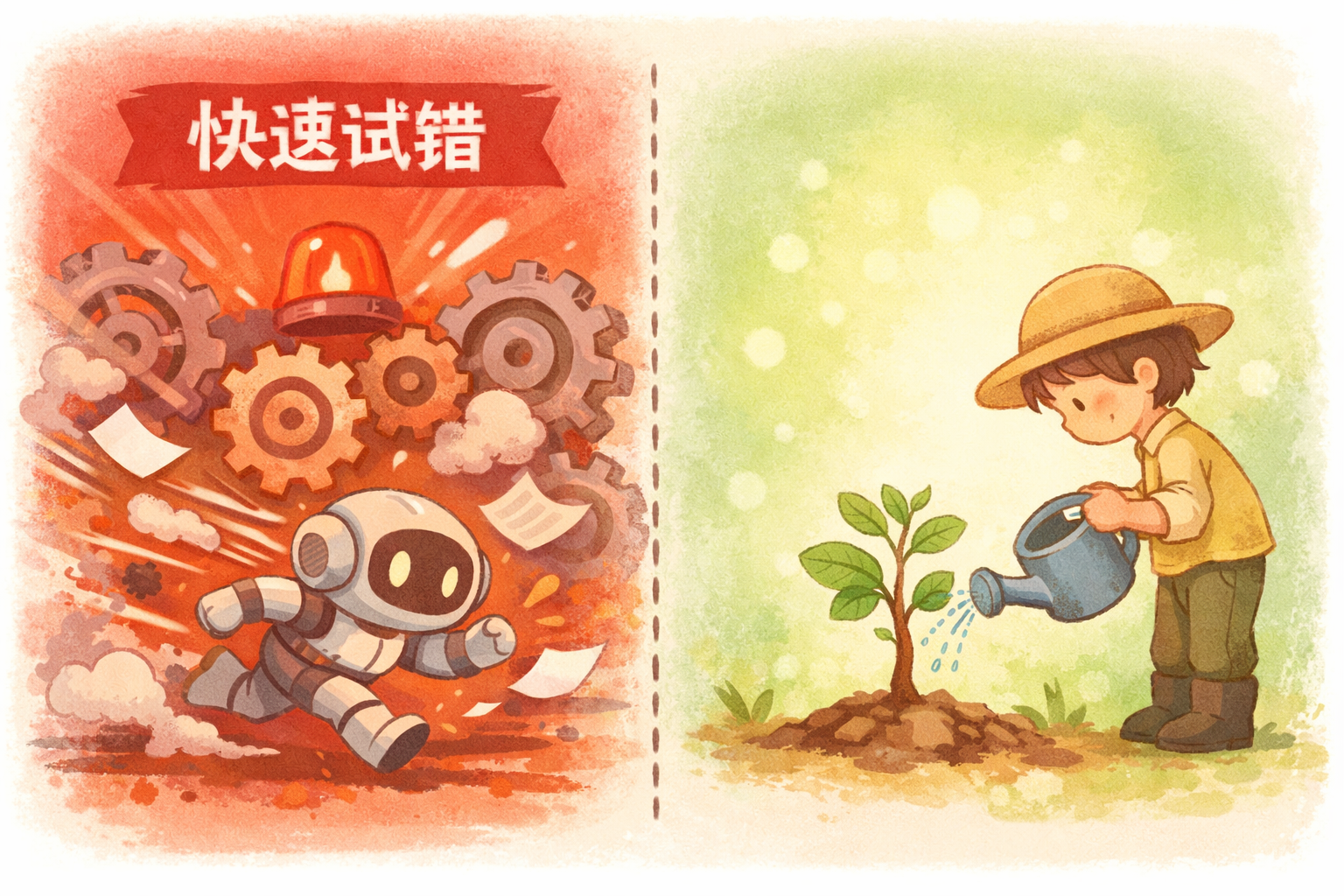
Time-Saving Tools Left Us Busier Than Ever
Ronacher also makes a point that resonates with many:
He’s become increasingly skeptical of tools that claim to “save time.” On the surface: automation, efficiency, time saved.
But in reality? He observes that people who fully embrace AI and agentic tools seem to have less and less time available.
The reason is brutal: time saved gets immediately filled back up.
You type three times faster, so you get assigned three times more work. You automate your CI/CD, so deployments go from once a week to five times a day. Saved time never gets banked. It just makes you run faster, until your competition catches up, and then everyone is more exhausted together.
Ronacher describes it like a treadmill: you’re running faster and faster, but you never actually get anywhere.
He works right in the hottest part of the AI industry. He says he’s busier than ever, even when he consciously tries to scale back and create breathing room.
No One Can Mass-Produce a 50-Year-Old Oak
At the end of the article, Ronacher writes about something he recently did:
He and a friend planted a tree together. He hopes it will grow, hopes it will provide shade many years from now. He knows it will take time, and he’s not in a rush.
Then he says what might be the most powerful line in the entire piece:
No one can mass-produce a 50-year-old oak tree. And no one can conjure trust, quality, or community out of a weekend sprint.
He lists the things he values most: those open source projects, the long-term working relationships, the communities he can genuinely rely on. All of them, without exception, took a long time to become what they are. No tool — no matter how fast — can accelerate that process.
FAQ
Who is Ronacher? Armin Ronacher is a well-known open source developer, principal author of Flask and Jinja2, and a contributor to projects like Sphinx and Rust. He currently works at Sentry.
Did AI really make development faster? Why does everyone still feel time-poor? Ronacher’s observation: time saved gets immediately filled by new tasks. Type three times faster, and you get three times more assignments. It’s a racing treadmill, not real savings.
Do open source projects really only last a few months? Ronacher doesn’t provide exact statistics. His point is that a large number of “open source projects” are essentially one-shot enthusiasm products with no long-term maintainer and no community foundation — their reliability is naturally limited.
Ronacher’s blog uses a CC BY-NC 4.0 license, prohibiting commercial use but allowing free redistribution and adaptation. He probably thinks: if I spent time writing something, it should exist in some meaningful form.
Next time you’re pushed to “validate fast,” “iterate fast,” and “ship fast” in a sprint planning meeting, think about that oak tree.
This article is adapted from Armin Ronacher’s blog , published under CC BY-NC 4.0 license.